The plane banks over the rim of the valley and suddenly Kathmandu is below us: a dense, brown-grey carpet of houses, temples and narrow streets, pressed into the bowl of the hills. Even before the doors open, the city announces itself – warm air, diesel, something sweet and smoky.
I have come to Nepal for the mountains, but the first days belong to the city. The drive from the airport is a slow negotiation of traffic, horns and sunlight. In Thamel, backpackers and trekking shops crowd the same narrow lanes as shrines, bookshops and stalls selling prayer flags. Everything is moving, and nothing is quiet.
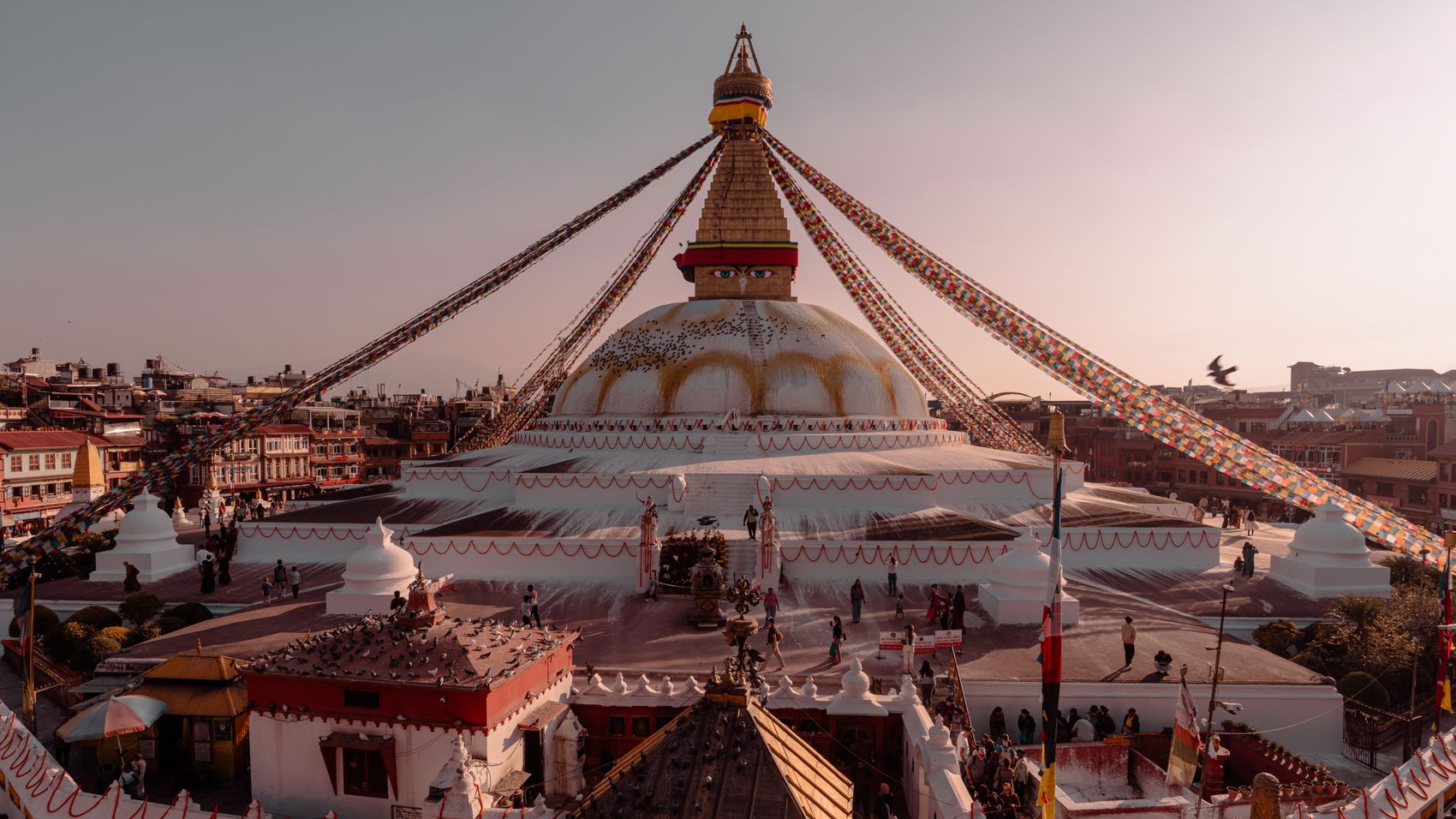
The first morning I walk to Boudhanath before sunrise. The stupa rises out of the mist like a white hill, its painted eyes looking in every direction at once. Pilgrims move clockwise around the base, spinning prayer wheels, murmuring mantras. Butter lamps flicker in the cold air. For a while I simply stand and watch, camera at my side.
This is what I want to photograph: not the postcard, but the rhythm. The way people touch the stones, the way the prayer flags pull in the wind, the way the city wakes around the stupa. I wait until the light reaches the white dome, then make a few frames and step back into the flow of walkers.
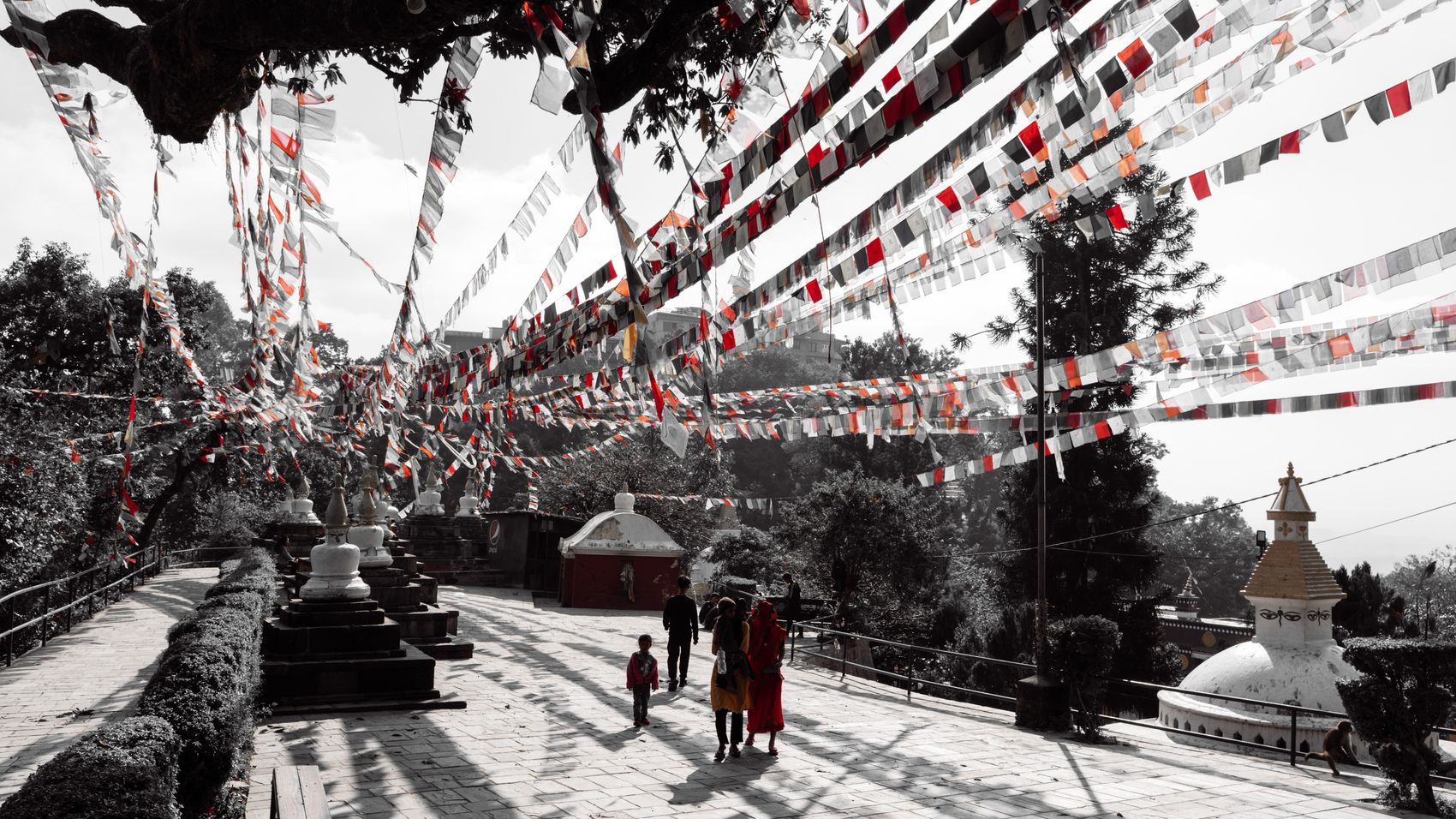
Later that day I climb the long staircase to Swayambhunath, the monkey temple, on the hill west of the city. Prayer flags stretch between the trees, monkeys watch from the railings, and the whole valley opens below. The stupa here is smaller and older, and the air is full of bells and the smell of incense. I stay until the afternoon light turns the white dome gold.
Later, in the old city, Durbar Square is a different kind of theatre. Temples stand between shops and houses; pigeons lift from the stones; a woman sells marigolds from a basket; a boy runs past with a football. The sacred and the everyday are not separated here. They share the same square, the same dust, the same light.
I photograph slowly, aware that I am a guest. A smile, a nod, a question – sometimes a conversation, sometimes a no. The best frames are not taken; they are offered. I am learning to wait for those moments instead of chasing them.
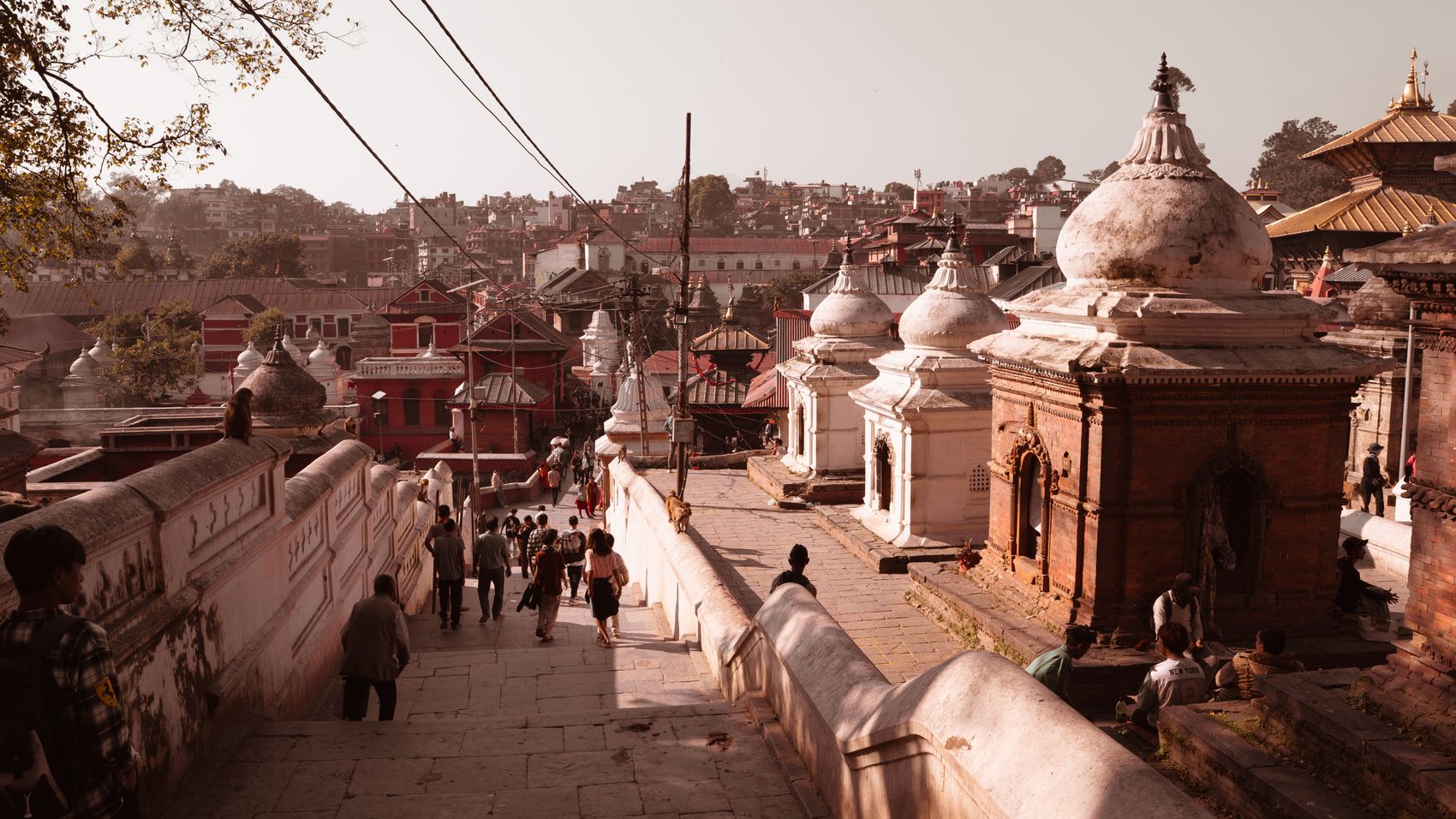
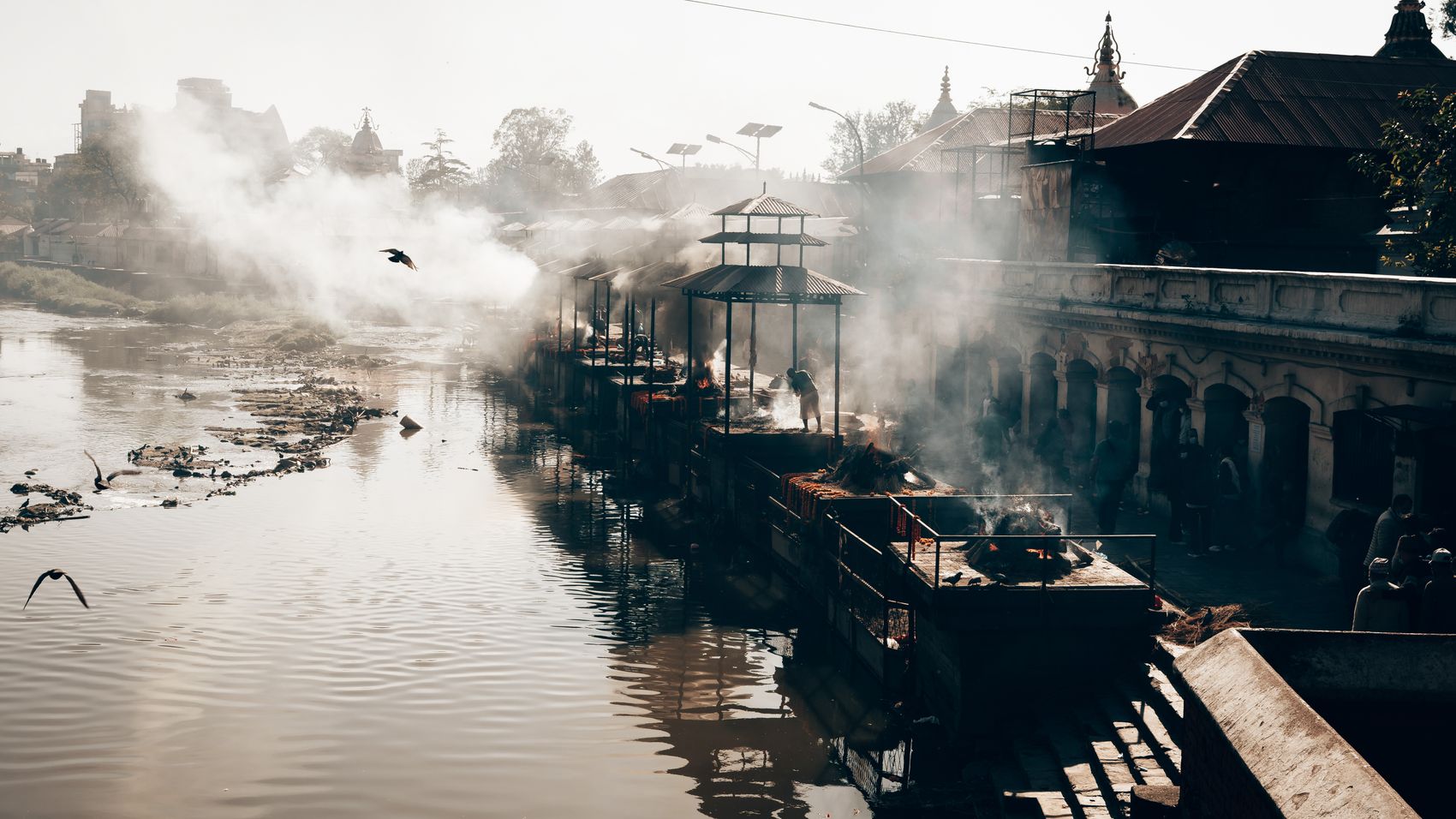
At Pashupatinath, the Bagmati river runs dark and slow. Smoke rises from the cremation ghats, and families sit on the steps in the sun. It is one of the oldest and most sacred places in the city, and it is also a place of ordinary grief. I keep the camera low and quiet. Some things are not for photographs; they are for witnessing.
In the evening, Thamel turns electric. Neon signs, music from open doors, the smell of momos and exhaust. After the stillness of the morning, the noise feels almost physical. I sit on a rooftop with a cup of tea and watch the city switch on, one window at a time.
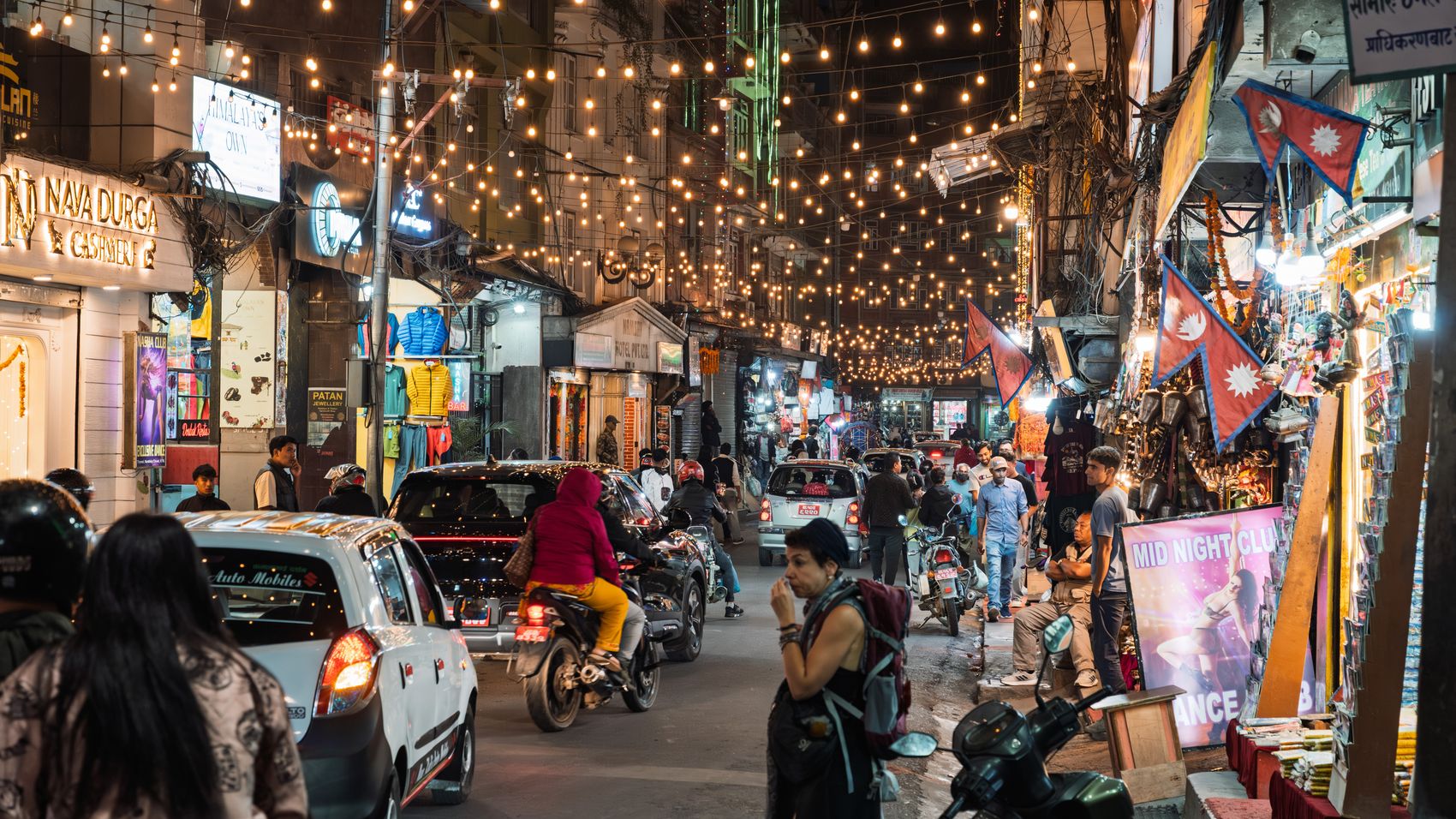
Kathmandu does not fit into a single image. It is a city of layers: prayer and traffic, temple bells and motorbikes, incense and diesel. The longer I stay, the more I understand that the photograph is not the goal. The goal is to move at the city's pace, to look closely, and to let the place change the way I see.
In a few days I will leave for the Annapurna Circuit. The mountains are waiting, and the city will become a memory of noise and colour. But I know I will carry Kathmandu with me – the white dome in the mist, the prayer wheels, the smoke over the river – long after the trail begins.